


Using Hydrochloric Acid on Concrete: Dilution, Dwell Time and Safety
 Slate Crete
If you’ve ever watched a tired, dusty driveway come up looking like new after an acid wash, you’ll know why hydrochloric acid has stuck around as a go-to step in concrete prep. It opens up the surface and strips away latancy, the powdery layer of fine cement particles and sand that rises to the top of fresh concrete, giving concrete sealers something proper to bite into.
But it’s not a job you can leave to chance. Get the dilution wrong, leave it sitting too long, or skip the right gear, and you’ll end up with a patchy finish or a genuine safety hazard.
At Australian Slate-Crete Supplies, we’ve been helping Melbourne tradies and DIYers get this step right for over 30 years, so here’s what you need to know about mixing it safely, timing it properly, and protecting yourself while you work.
Why Acid Washing Is Still the Go-To for Concrete Prep
Hydrochloric acid remains a popular choice for concrete preparation because it cheaply and quickly etches the surface texture, strips away surface laitance, and removes stubborn efflorescence or mineral crusts. This helps sealers grip the concrete easier for better coverage and protection.
It is a popular method thanks to low costs and easy access at hardware stores. Basic tools and cheap liquid acid can do a similar job, for a lot less money than expensive machinery.
Acid washing is great for a deep clean of cement that has gone through a lot. It can clean away heavy rust, mineral deposits and mould.
Still, many current professionals prefer mechanical grinding over acid etching because they feel results using acid can be uneven or leave harmful chemical residue afterwards. In some instances, the acid fails to remove deep oils and grease, which can ruin the concrete slab for the application of a sealer.
Finally, some professionals prefer the mechanical method because of safety hazards such as harsh fumes and the danger of chemical burns.
If you prepare your surfaces well and have all the appropriate protective and safety gear, that shouldn’t be a worry for you.
What Hydrochloric Acid Actually Does to a Concrete Surface
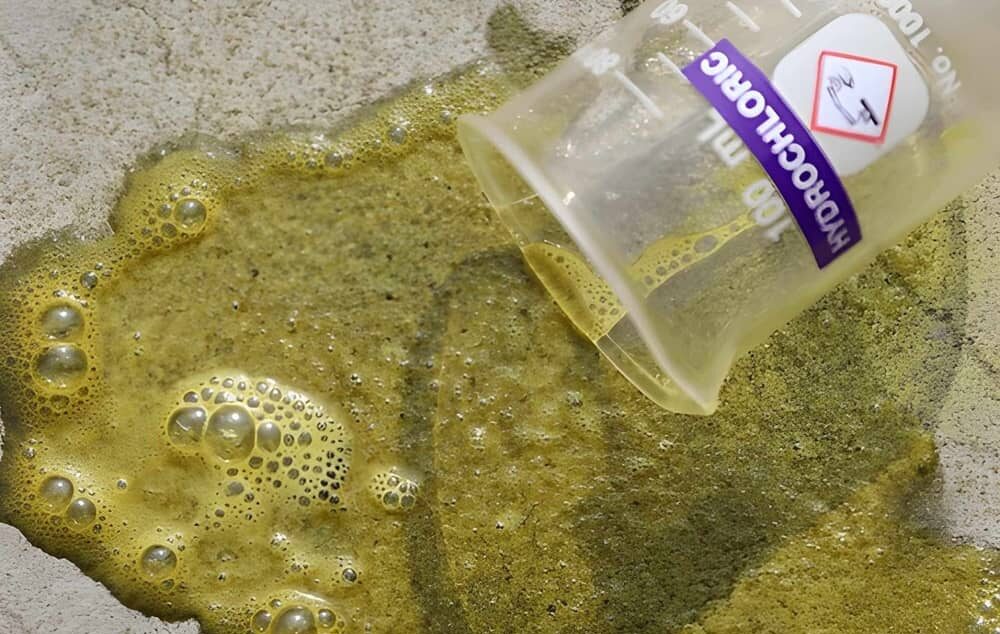
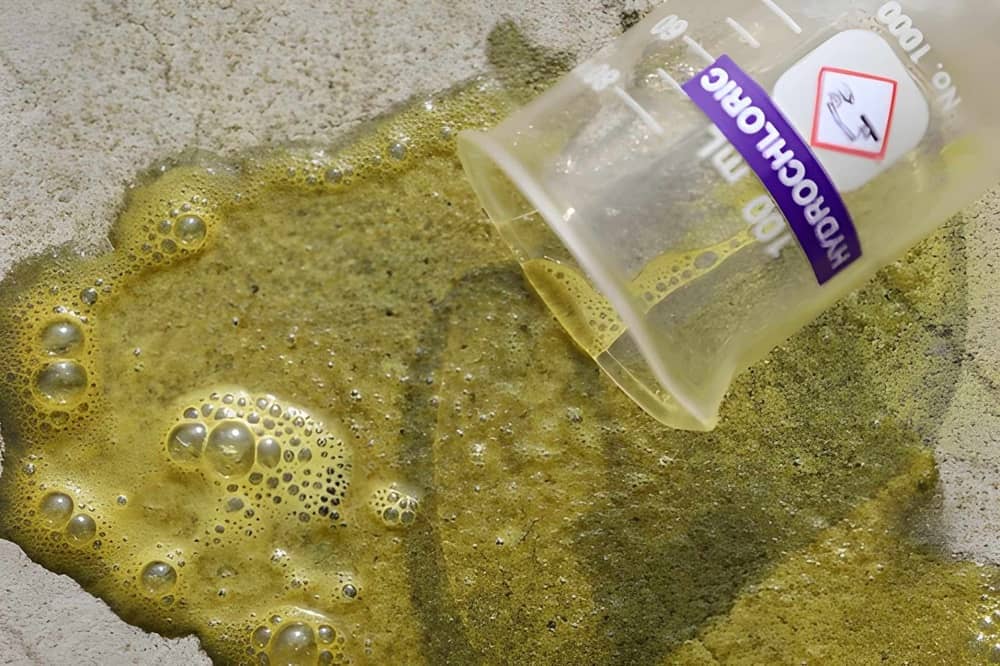
When applied to concrete, hydrochloric acid, also known as muriatic acid, chemically reacts with the alkaline compounds, such as calcium hydroxide and calcium carbonate. The chemical reaction comes off as a fizzing or bubbling, releasing carbon dioxide and water-soluble salts.
It dissolves the top micro-layer of cement paste and opens up the pores beneath. The acid roughs up the surface profile and strips away dirt and other small debris.
Getting the Dilution Ratio Right
The ratio of acid to water must be right to help control the reaction and get the best outcome. The ratio is: one part hydrochloric acid with ten parts water (1:10) for general cleaning, or a 1:3 ratio for heavy concrete etching.
When mixing, always pour acid into water, not the other way around. This prevents dangerous splashing. Some acids can react energetically when poured into water. This can cause burns to exposed skin.
Always wear protective gear when working with acid, such as rubber gloves, rubber boots and safety glasses. Wear a respirator to protect from possible fumes and work outside for ventilation.
Mixing and Application Steps
- Pour the clean water into a clean plastic watering can first.
- Slowly pour the hydrochloric acid into the water.
- Make sure concrete is damp first
- Pour generously over the concrete
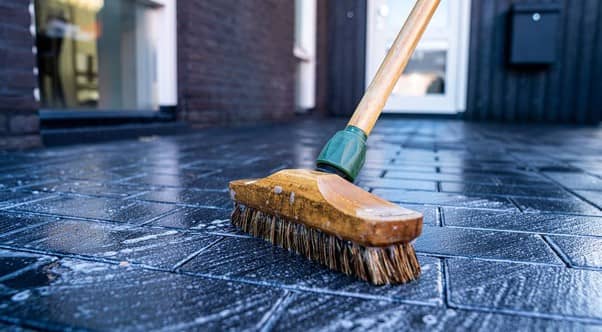
- Agitate the mixture onto the concrete using a stiff plastic brush, until fizzing stops
- Do not let it dry on the surface.
Best Practices for Safe Application
- Work in Sections: Apply and rinse small areas at a time (e.g., 3-by-3 meter sections) rather than the whole slab at once. This helps to keep control of the clean, and helps keep an even surface over a large area.
- Watch the Fizz: The active bubbling reaction with concrete slows down significantly after a few minutes; once the fizzing stops, the active acid is largely spent and is ready for rinsing.
- Never Let It Dry: Keep a hose ready and rinse immediately if it starts drying out. Dry acid leaves residue that can continue to damage your concrete.
- Neutralise and Rinse: Stop the chemical reaction promptly by applying a neutralising wash like a baking soda and water mixture, then rinse thoroughly with clean water.
Safety Gear and Precautions Before You Start
While hydrochloric acid is freely available from any hardware store, it is still a dangerous material, and you should absolutely wear protective gear while using it.
Safety Gear
- Gloves: Heavy-duty rubber or neoprene gloves rated for chemical resistance.
- Eye Protection: Chemical splash goggles that provide a complete seal around the eyes.
- Respiratory Protection: A respirator equipped with acid gas cartridges to prevent inhalation of fumes.
- Body Protection: A long-sleeved shirt, long pants, and a chemical-resistant rubber apron.
- Footwear: Tall rubber boots to protect against splashes and runoff.
Always dilute the acid by pouring it into water. Never pour the water into acid. Keep a garden hose nearby to wash down any spills on yourself or surrounding ground.
Important Precautions
- Dilution Method: Always add acid to water, never water to acid. Adding water to concentrated acid can cause a violent exothermic reaction and dangerous splashing.
- Ventilation: Only perform this work in well-ventilated outdoor areas. Acid fumes are toxic and can quickly accumulate in enclosed spaces.
- Exclusion Zone: Ensure that other people, especially children and pets, are completely restricted from the area.
- Emergency Water Source: Keep a high-pressure water hose running and immediately accessible to flush any accidental spills on the skin or surfaces.
- Professional Consultation: Due to the severe risk of chemical burns, permanent eye damage, and respiratory distress, it is highly recommended to hire a licensed professional for acid etching or cleaning.
Rinsing the Surface
- Flush with clean water: Use a garden hose or pressure washer on a low setting to wash away all chemical residue.
- Avoid runoff damage: Direct the wastewater away from garden beds, lawns, and metal structures to prevent corrosion or plant death.
- Check the pH: Test the surface if you plan to paint or apply a concrete sealer; the ideal pH balance should be close to neutral (7.0 to 8.5) before coating.
Common Mistakes That Ruin the Finish
Using hydrochloric acid on concrete is a powerful way to etch the surface for resealing or to prepare for painting, but it can be very unforgiving. A single mistake can permanently erode or structurally weaken your concrete.
Common mistakes include:
- The Wrong Dilution Ratio. A stronger solution can eat too deeply into the concrete. Some people think they can speed the process up by having a stronger acidic solution. It can expose the coarse aggregate beneath the surface leaving a rough and uneven surface. This will ruin the finish when the sealer goes on.
- Adding Water to Acid. Pouring water onto the acid can cause an exothermic reaction which makes the liquid violently boil and splash. This can burn your skin or your eyes, or damage the area around where you’re mixing. Fill your bucket with water and then add the acid.
- Skipping the Pre-Wet Step. Some people forget to prepare the concrete for the acid job. Dry concrete acts like a sponge and will suck the acid deep inside it. This causes pitting deep inside the concrete, white chemical stains and uneven etching. Hose down the concrete thoroughly before applying the acid wash. The surface needs to be damp, not soaking wet.
- Letting Acid Dry on the Concrete. Leaving the acid wash on the concrete too long and letting it dry before rinsing is not good for the surface. Even though it is dry, the acid keeps reacting with the surface, making the surface weak and powdery. This often happens if someone tries to acid wash a large area, and loses control. Work on small sections at a time.
When to Call in the Professionals Instead
Not every job is a DIY one, and acid washing has a few situations where it pays to step back and bring in a professional instead. Deep structural cracks are a big one, since acid will only make weak concrete even weaker.
Large commercial spaces like warehouses are usually better suited to heavy machine washing than a hand-applied acid job. Indoor rooms are another no-go, small, enclosed spaces trap toxic fumes with nowhere to escape.
And if you’re dealing with severe oil stains, acid won’t cut through deep grease the way professional grinding will.
If your job falls into any of these categories, or you’re simply not confident handling a hazardous chemical yourself, it’s worth bringing in a licensed professional rather than risking your slab or your safety.
Set Yourself Up for Success with Australian Slate-Crete Supplies
For everything else, that’s where we come in. As one of Melbourne’s trusted concrete tool suppliers, Australian Slate-Crete Supplies has spent over 30 years helping tradies and DIYers concrete sealer supplies in Melbourne and get the technique right the first time. Whether you need the acid itself, the right PPE, a neutralising agent, or straightforward advice on dilution ratios and dwell times for your specific job, our team at our Epping showroom is here to point you in the right direction.
Have a question before you start, or want to talk through your project? Give us a call on 03 9408 7722 or visit our Epping showroom, we’re always happy to help you get the job done safely and properly the first time.
-
 February 4, 2022Sandstone Concrete Stencil
Do you want to add a touch of luxury and elegance to your concrete projects? If so, then consider using sandstone concrete stencils!
Read More -
 February 4, 2022Gloss Brick Sealer
Gloss brick sealer is a wonderful material for adding a brilliant shine to your brick slip wall feature.
Read More -
 February 4, 2022Bluestone Concrete Sealer
In a broad sense, the term “bluestone” is sometimes used to refer to a variety of stones. It’s a marketing term rather than a geological one.
Read More