

- Blades
- Chemstuk Epoxy Sealers
- Concrete Hardeners
- Concrete Sealers
- Concrete Vibrator
- Hand Tools
- Bolt Cutters
- Brooms
- Buckets
- Bullfloats
- Cleaning Supplies
- Concrete Brooms
- Concrete Edgers
- Concrete Finishing Brooms
- Concrete Rakes
- Concrete Rakes
- Concrete Screeds
- Concrete Walking Edger
- Extention Poles
- Floor Scrapers
- Fresnos
- Groovers
- Hammers
- Handles and Poles
- Handles and Poles
- Nips
- Shovels
- Specialty Edgers
- Spirit Levels
- Squeegees
- Stipples & Floats
- Trowels
- Trowels
- Wheelbarrows
- Industrial Concrete Sprayer
- Machines
- Oxides
- Painting Supplies
- Plumbing Supplies
- Pressure Washing
- Repair
- Retarder
- Safety
- Sale category
- Site Prep
- Slate/Stamped concrete
- Spray On Paving
- Stencils
Penetrating
Showing all 2 results


Penetrating Concrete Sealer: Invisible, Breathable Protection for Australian Concrete
A penetrating concrete sealer soaks into the slab and bonds chemically within the pores, protecting the concrete from the inside without forming a surface film. Acrylic "wet-look" and other film-forming sealers sit on top instead, and can peel, flake or yellow over time. A penetrating sealer keeps the surface looking natural while letting the concrete breathe.
This makes it a popular choice across Australia for driveways, exposed aggregate, pool surrounds and coastal slabs exposed to water, salt and efflorescence. This guide covers how penetrating sealers work, how they compare to film-forming and water-based vs solvent-based options, and how to choose and apply the right one for your job.
What is a penetrating concrete sealer?
Penetrating sealers, also called impregnating sealers, and often based on silane/siloxane chemistry, react below the surface rather than coating the top of the slab. The protection sits *inside* the concrete while the finish stays natural and matte. This leaves the surface vapour-permeable (it can "breathe", which helps avoid trapped-moisture problems), and there's no film to peel, flake or go cloudy over time. Their job is to slow down what damages concrete: water ingress, chloride and salt attack, surface efflorescence, and freeze-thaw stress. And because they don't lay down a glossy film, they generally don't make a surface slippery underfoot.
Penetrating vs film-forming (wet-look) sealers, which should you choose?
Film-forming sealers, acrylics and "wet-look" products, sit on the surface. They deepen the colour and add gloss, but the film can wear, peel or need re-coating over time. Penetrating sealers stay invisible, breathable and long-lived, with nothing on top to fail.
Choose a penetrating sealer if you want the concrete to look untouched, with maximum breathability and low-maintenance protection. Choose a film-forming product if a rich, glossy finish is what you're after. If that's the case, see our solvent-based wet-look sealers and water-based sealers.
Water-based vs solvent-based penetrating sealers
Both carriers deliver penetrating protection; they differ in handling and application:
- Water-based: low odour, low-VOC and easy clean-up, breathable and better suited to enclosed or indoor areas. If you specifically want a penetrating sealer without solvents, see our water-based penetrating sealers.
- Solvent-based: can carry the active deeper into dense or older concrete and is a common choice for exposed exterior work, but has a stronger odour during application and needs good ventilation.
Choosing the right sealer for your surface
The right product depends on the surface and how it's used:
- Driveways: including steep or high-traffic driveways where you don't want to add a slippery film.
- Exposed aggregate: protects without dulling or glossing the stone finish.
- Pool surrounds and coastal slabs: where chloride and salt exposure is the main threat.
- Brick and natural stone: many penetrating sealers suit masonry as well as concrete.
- Garage and warehouse floors: durable, low-maintenance protection underfoot.
Our penetrating sealer range
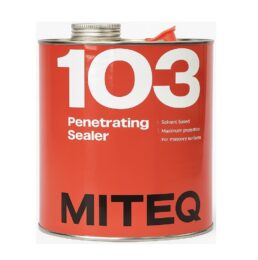
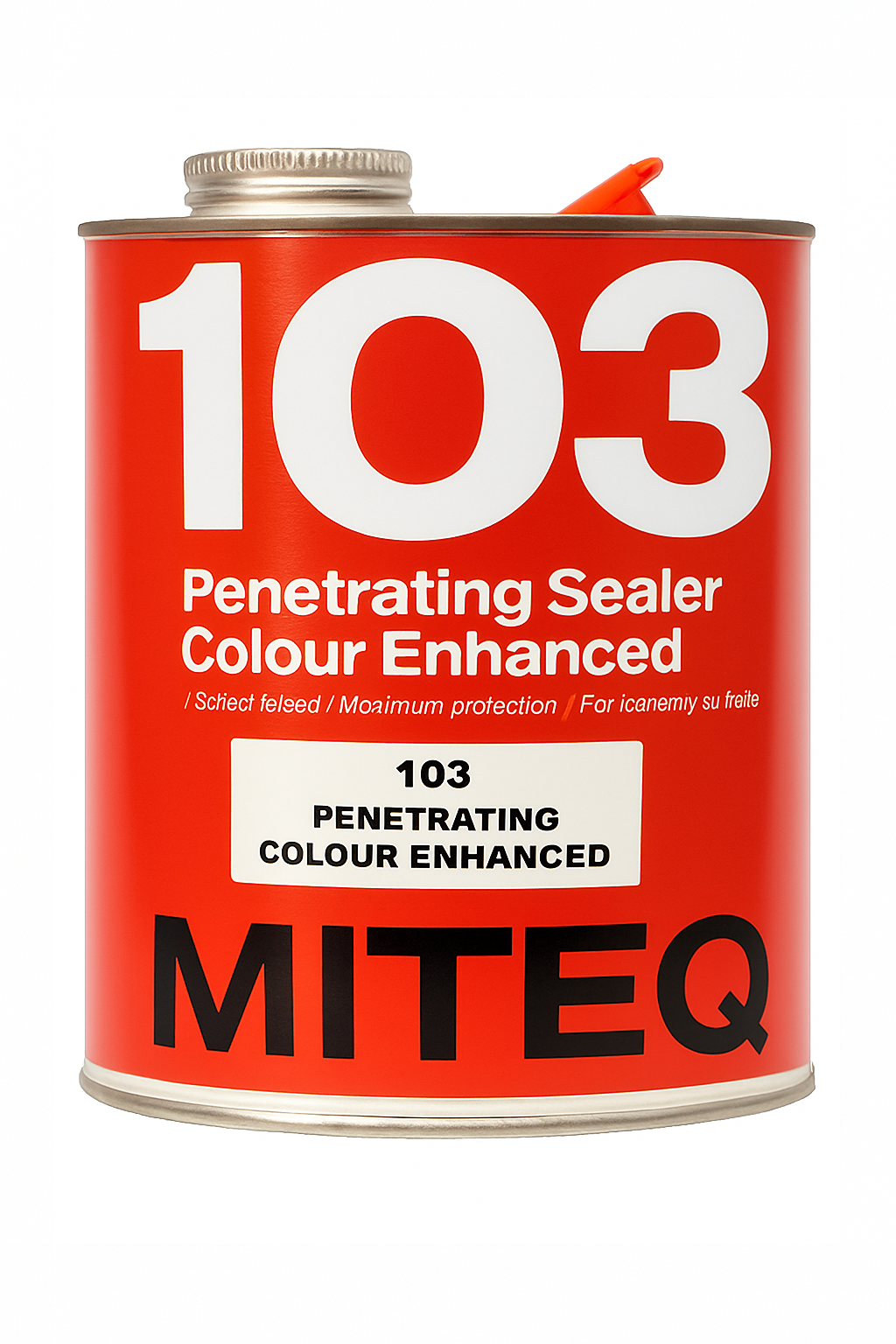
Australian Slate-Crete Supplies stocks trade-grade penetrating sealers, including the Miteq 103 Penetrating Sealer line (natural and colour-enhancing options). Rather than list every SKU here, browse the range for the current products, pack sizes and pricing. Talk to our team if you'd like a recommendation for your specific surface.
How much you need, coverage and quantities
Coverage varies with the product, how absorbent your concrete is, and the number of coats you apply. Check each product's Technical Data Sheet (TDS) for its stated coverage rate (square metres per litre), then multiply by your area to work out how many litres to order.
As a rule, new concrete should be left to cure for around 28 days before sealing.
How to apply a penetrating concrete sealer
- Prepare the surface: clean, dry and fully cured (about 28 days for new concrete). Remove dirt, oil and any previous coating.
- Check porosity and moisture: a bead-of-water test shows how thirsty the slab is; the surface should be dry before you start.
- Apply thin, even coats: by roller, low-pressure sprayer or broom, following the product's TDS for the number of coats.
- Mind the conditions: apply within the temperature range on the label (commonly around 15-28°C) and allow the stated cure and re-coat times before use.
Penetrating vs film-forming at a glance
Penetrating (impregnating) sealers provide a natural, invisible finish by bonding within the pores of the surface rather than forming a layer on top. They are vapour-permeable, offer no peel or flake risk, and are ideal for maintaining a natural appearance, particularly in areas exposed to salt or coastal conditions. Film-forming (acrylic/wet look) sealers, on the other hand, form a protective film on the surface to create a glossy, colour-enriched wet-look finish. They have limited breathability and may be more susceptible to peeling or flaking over time, potentially requiring recoating. Both penetrating and film-forming sealers are available in water-based or solvent-based options.
About Australian Slate-Crete Supplies
Australian Slate-Crete Supplies is a family business, and Robert and the team have been at it since 1994. Three decades on, the thing customers still come for is honest, product-specific advice, which is a big reason roughly nine in ten of them come back. We've packed and sent well over 200,000 orders in that time, and everything we stock is quality-controlled and chosen to hold up in Australian conditions.
Shop the range or get expert advice
Ready to protect your concrete the invisible way? Order from our penetrating sealer range online for Australia-wide delivery, or call the team on 03 9408 7722 for a recommendation for your surface. Still weighing an invisible seal against a decorative finish? Our water-based and solvent-based ranges are the alternatives to compare.
Penetrating concrete sealer FAQs
No, a true penetrating sealer leaves a natural finish. If you want to darken or add gloss, choose a wet-look film-forming sealer instead.
Around 28 days, so the slab is fully cured.
Yes, but check the product's Technical Data Sheet (TDS) first, since penetrating sealers absorb into the concrete rather than forming a surface film, some coatings adhere differently on top of them. If you're unsure, our team can advise on the right approach for your specific product.
Penetrating sealers are long-life and don't peel; re-coat intervals depend on the product and wear, the TDS gives a guide.
Penetrating sealers don't add a glossy film, so they generally don't make a surface more slippery, a key reason they suit driveways and pool surrounds.
We supply professional, trade-grade sealers and give tailored advice on the right product and system for your job, rather than a one-size-fits-all retail range.